


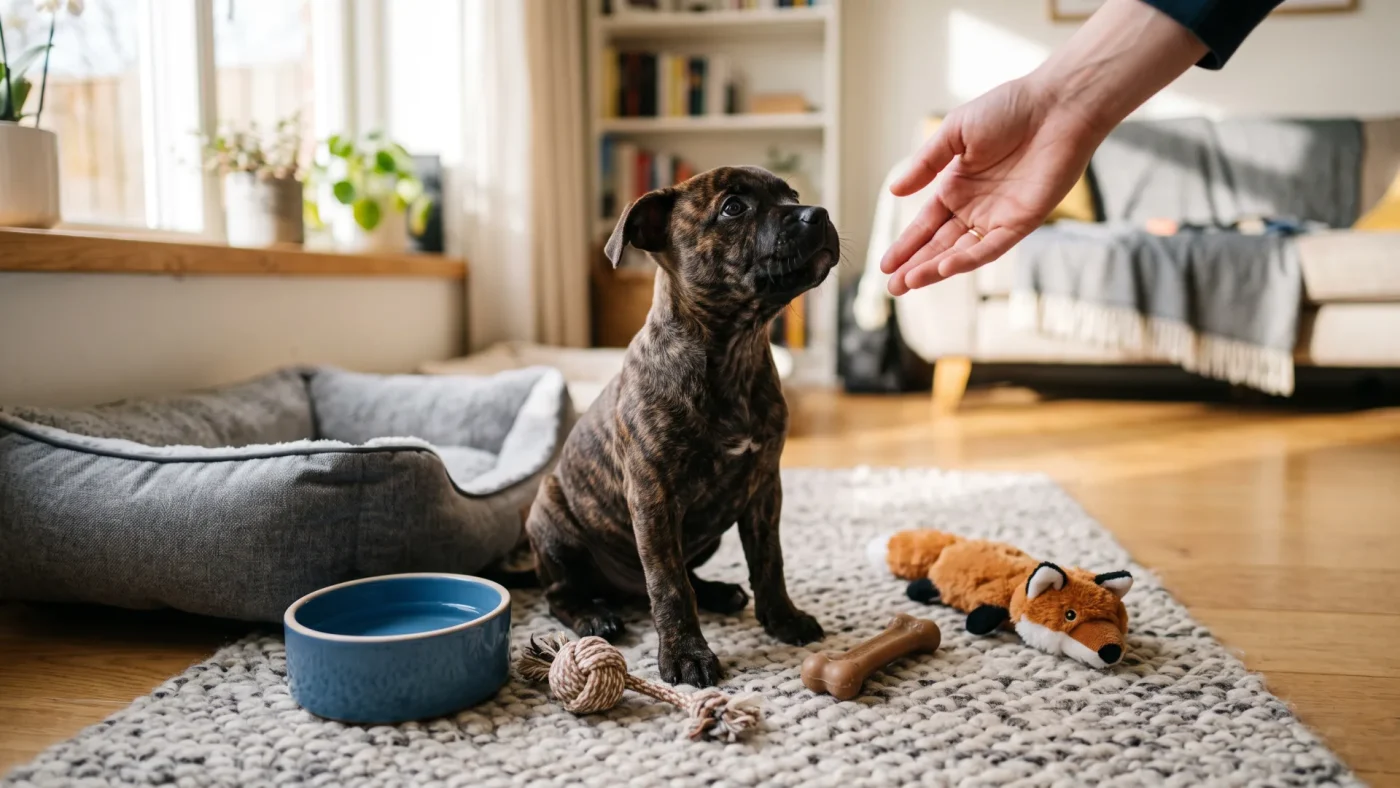
Adopting an English Staffordshire Bull Terrier can look like an easy decision at first: a medium-sized, muscular, short-coated dog that is deeply attached to people. But the breed has real needs when it comes to energy, training and health. This English Staffordshire Bull Terrier adoption guide covers the pros and cons of owning a Staffy, what to look for when choosing a puppy and what to expect in the first few months.
The Staffordshire Bull Terrier at a Glance
- Height: 36-41 cm at the shoulder
- Weight: 13-17 kg for males, 11-15.4 kg for females
- Lifespan: 12-14 years in most sources
For more on the breed’s temperament, coat colours and everyday care, see our guide to English Staffordshire Bull Terrier characteristics.
Pros of Adopting an English Staffordshire Bull Terrier
- Loyal and affectionate: Staffies are deeply loyal, loving dogs. They like being part of the family and get on well with people.
- Active and playful: They are energetic and love physical activity. Frequent walks and plenty of play keep them happy.
- Very little drool: Drooling is minimal in this breed.
- Manageable size: As a medium-sized breed, a Staffy is easier to look after indoors than a large dog.
Cons of Adopting an English Staffordshire Bull Terrier
- Training and socialisation are a must: A Staffy’s training and socialisation need serious attention. Without them, the dog may develop problem behaviour towards other dogs.
- High energy: High energy means a need for regular exercise. If that need is not met, you may see hyperactivity and destructive behaviour.
- Does not cope well alone: Because Staffies are so attached to their people, they can develop separation anxiety when left alone for long periods.
- Reputation: Unfortunately, in the wrong hands a Staffy can come to be seen as a dangerous dog.
- Health problems: The breed is prone to some hereditary conditions, so regular vet check-ups matter.
- Misleading sales talk: As with any breed, some Staffordshire Bull Terrier puppy farms describe only the positives in order to sell more puppies and skip over the downsides. This causes real problems for prospective owners, so keep it in mind when you adopt a Staffy.
Caring for a Staffy Puppy
A good feeding plan is essential for healthy development. Food made for puppies supplies the nutrients a dog needs while it is growing. Choose protein-rich food made from fresh, natural ingredients.
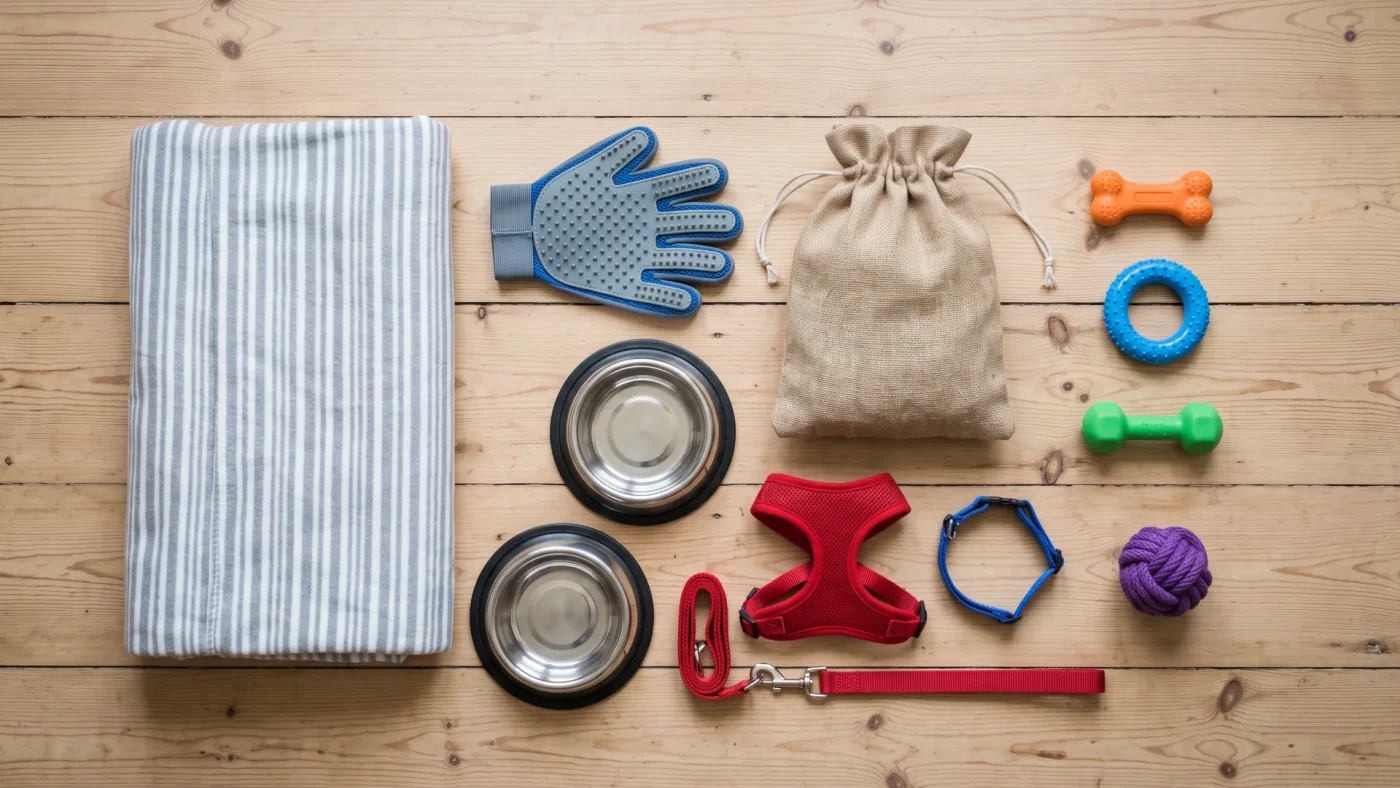
- Puppy food: Provides the extra protein a growing dog needs.
- Regular portions: Split the daily amount into meals that suit the puppy’s age. Overfeeding leads to weight gain.
- Fresh water: Clean water should be available at all times.
A Staffy’s nails grow quickly, so regular trimming is a must. Do not neglect dental care either. Keep up with the vaccination schedule, parasite treatments and routine health checks. For more detail, read our English Staffordshire puppy care guide.
Training and Socialisation
Staffy puppies are clever and eager to learn. Their strength and energy, however, mean that training has to start early. Begin basic obedience work while your dog is still a puppy. Socialisation is just as important, because it is how a dog learns to get along with other animals and people. Introducing your puppy to different places and situations helps it grow into a more confident and sociable adult.
- Positive reinforcement: Reward the behaviour you want and avoid harsh punishment.
- Obedience training: Starting young makes a real difference.
- Socialisation: Arrange calm, controlled introductions to different people and animals.
Health Checks When Choosing a Puppy
Health should be near the top of your list when adopting a Staffordshire Bull Terrier puppy. Make sure the puppy was raised in a healthy environment and that its parents were screened for hereditary conditions. Hereditary cataracts, hip dysplasia and allergies are among the problems seen in this breed, so it is important to buy from a breeder who can answer your questions with documents to back them up.
- DNA tests: Ask to see both parents’ results for HC-HSF4 (hereditary cataract) and L-2-HGA (L-2-hydroxyglutaric aciduria).
- Health records: Look at the vaccination record, parasite treatments and the vet’s examination notes.
- Meet the mother: Seeing the puppy with its mother, in the place where it was born, tells you a lot about its health and temperament.
Temperament and Exercise Needs
The Staffordshire Bull Terrier is extremely devoted to its family and settles easily into home life. It does not like being alone, though, and can develop separation anxiety if left for long stretches. An active household where someone has time for the dog suits this breed best. Because Staffies are usually friendly towards strangers, they do not make good guard dogs.
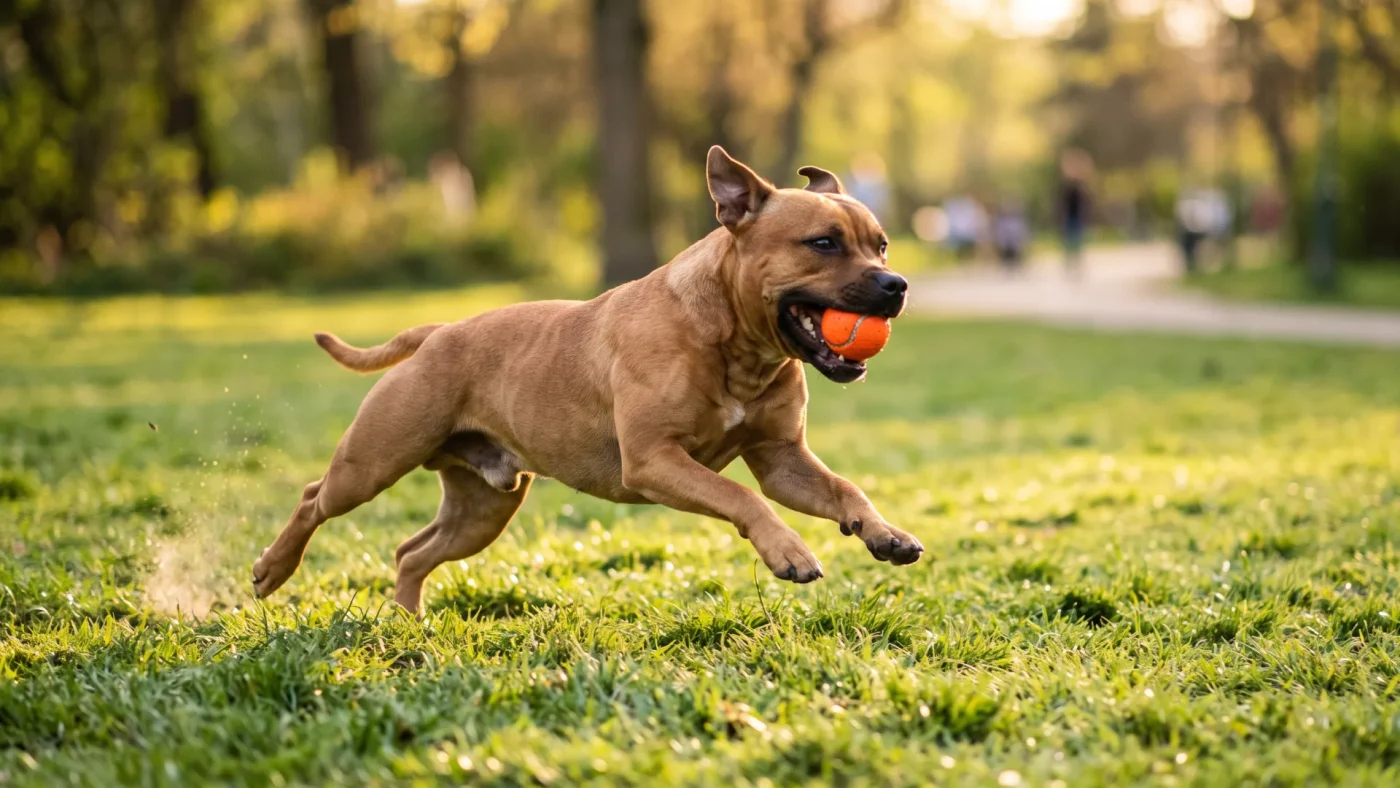
Staffy puppies are full of energy and need regular exercise. Daily walks, plus running and playing in the park, keep them happy in body and mind. A Staffy that does not get enough exercise may turn to destructive behaviour.
Hereditary Health Issues: Allergies and Skin Problems
The Staffordshire Bull Terrier is generally a healthy breed, but it is prone to some inherited problems. Cataracts and hip dysplasia are seen, and allergies and skin problems are especially common. Allergies usually appear when the body overreacts to something in the environment, a food or a particular substance, causing itching, redness, skin irritation and sometimes hair loss.
Allergies and Skin Conditions
A Staffy’s genetic make-up can leave it more sensitive to certain allergic reactions. An allergy is the immune system overreacting to things such as pollen, dust, food or chemicals, and the tendency is often inherited. In other words, your dog can inherit a predisposition to allergies from its parents.
Skin allergies such as atopic dermatitis are common in this breed and closely linked to genetic predisposition. Environmental factors may trigger them, but genetics lie at the root of the problem. That is why you should always ask the breeder about the allergy history of both parents before adopting a puppy. For more on the subject, read our article on Staffordshire Bull Terriers and allergies.
Final Thoughts
Adopting a Staffordshire Bull Terrier is a big responsibility. These dogs can be loyal and affectionate companions, but they need training, socialisation and regular exercise. Before you decide, take an honest look at whether your lifestyle and home suit this breed. If your schedule is very busy, it may be hard to give a Staffy the attention and care it needs. Check the local rules as well: our article on whether the English Staffordshire is a banned breed explains the legal situation.
Remember that adopting a dog is a 12-14 year commitment. With the right training, socialisation and care, a Staffy becomes a much-loved member of the family.

Most Read Articles
Nosebleeds in Dogs: 12 Causes and What You Can Do
ebleeds in dogs can cause concern for their owners. In this post, we’ll look at...
Oct
Staffordshire Bull Terrier Health Issues: What Conditions Are They Prone To?
Staffordshire Bull Terriers, known for their loyal and energetic nature, are wonderful companions but may...
Oct
Colour Dilution Alopecia in English Staffordshire Bull Terrier
The English Staffordshire Bull Terrier’s coat and skin condition indicate its general health. A healthy...
Apr