


The questions you ask when buying a puppy are the quickest way to understand what a seller is really selling you. A photo of a puppy tells you very little; the seller’s answers to your questions, and how comfortable they are giving them, tell you far more. We built this list around situations people run into when buying an English Staffordshire Bull Terrier (Staffordshire Bull Terrier) puppy, known in Turkey as the English Staff, but most of the questions apply to any breed.
For the breed’s health risks and general characteristics, you may want to start with our English Staffy guide. Here, for each question we explain three things: why you should ask it, what a good answer looks like and which answer is a warning sign.
How Should You Ask the Questions?
Ask your questions in writing if you can; answers sent by message become a record later on. If you ask several sellers the same list, you can put their answers side by side and compare them. For answers that rely on documents, ask for photos first and see the originals when you visit.
Questions to a breeder should not make them uncomfortable. A responsible breeder answers most of these questions before you even ask. A seller who gets annoyed at your questions or says “people who ask this many questions can’t buy from me” has already given you an answer.
The Mother, the Father and Health History
1. Can I See the Mother and Father?
Why ask: The parents are the best clue to the build and temperament a puppy will have as an adult. The mother’s skin, weight and attitude towards people show what you may face later on.
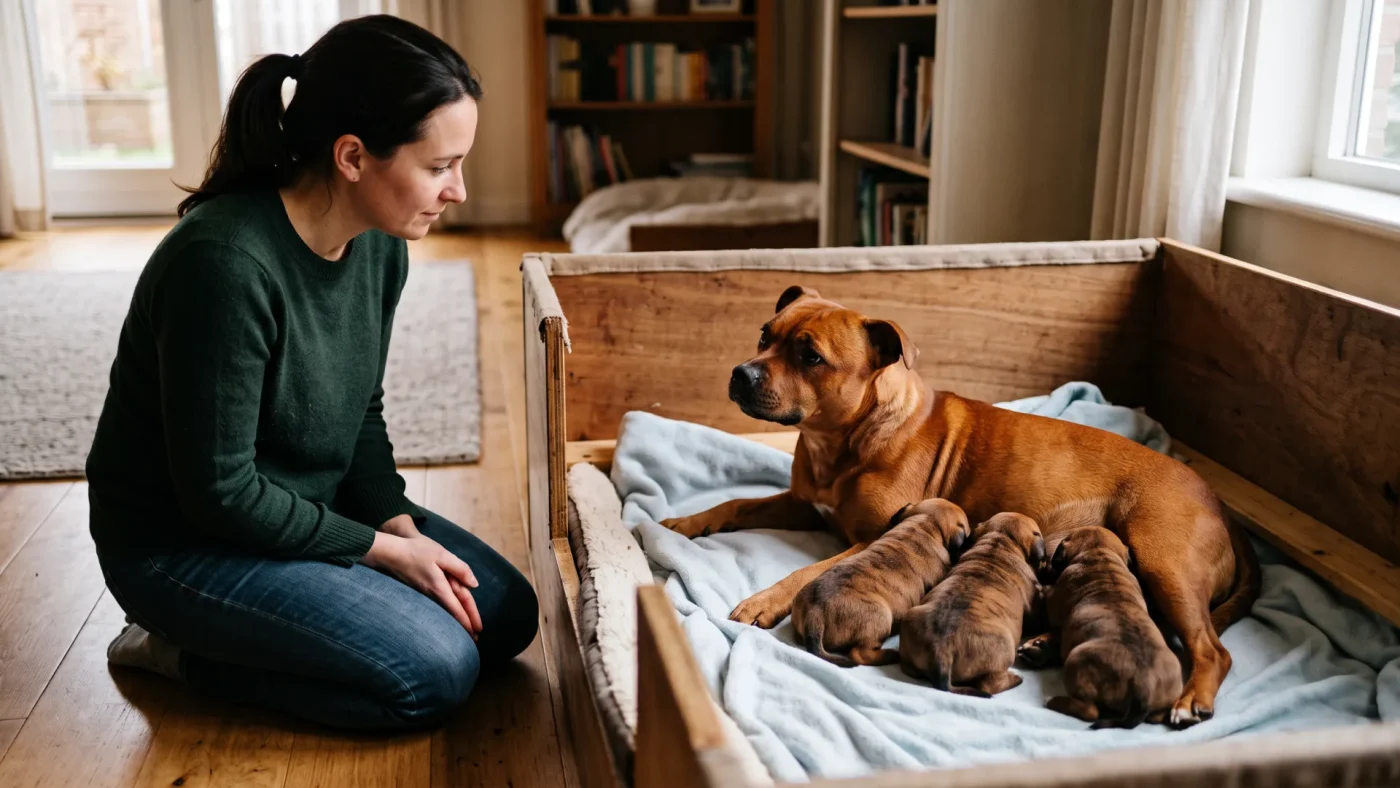
Good answer: “The mother is here; you can see her with her puppies. The father belongs to another breeder, and we will share his documents and videos with you.”
Warning sign: The mother is not shown, with excuses such as “she’s somewhere else right now” or “she gets tense around strangers”, or the dog you are shown takes no interest in the puppies at all.
2. Have the Parents Been Health Tested, and Can I See the Results?
Why ask: L-2-HGA and hereditary cataract (HC-HSF4) are two conditions in English Staffies where carrier status can be identified with a DNA test. The Kennel Club also recommends eye examinations and elbow screening for breeding dogs. We explain why these tests matter in our article on Staffordshire Bull Terrier health issues.
Good answer: Results for both parents showing the laboratory’s name and the dog’s microchip number. If one parent is a carrier, the seller does not hide it and shows documents proving that the other parent is clear.
Warning sign: Undocumented answers such as “there’s no disease in our line” or “the vet checked them, they’re perfectly healthy”, or results for only one parent.
3. How Old Is the Mother, and How Many Litters Has She Had?
Why ask: A female bred very young, or bred back to back without rest, becomes worn down, and this affects the health of both the mother and the puppies. For example, the Kennel Club in the UK will not, except in exceptional circumstances, register puppies from a female who was mated when under a year old or who has already had four litters.
Good answer: The mother’s date of birth is on her papers, the dates of her previous litters are stated openly and there was a rest period between them.
Warning sign: Nobody knows the mother’s age, you hear “I don’t remember which litter this is”, or it becomes clear that she is bred at every season.
4. Does the Puppy Have a Pedigree, and Which Organisation Issues It?
Why ask: A pedigree records the puppy’s breed and ancestry. In Turkey, pedigrees are issued by the Federation of Dog Breeds and Cynology (Köpek Irkları ve Kinoloji Federasyonu, KIF), a full member of the FCI. If your dog is ever mistaken for an American Staffordshire Terrier, this is the strongest document you have; but it is not a health guarantee.
Good answer: The registration numbers of the mother and father are shown, and the seller explains how and when the litter will be registered.
Warning sign: A “certificate” the seller has made up themselves, an organisation whose registry is unclear, or the answer “we’ll sort the pedigree out later”.
The Puppy’s First Weeks
5. How Many Weeks Old Is the Puppy, and When Will It Leave Its Mother?
Why ask: A puppy separated from its mother too early may not fully learn bite control and dog language from its littermates. Veterinary organisations recommend that a puppy stays with its mother for at least 8 weeks. Turkey’s regulation on pet sales premises also does not allow puppies under two months old to be kept at the point of sale.
Good answer: The date of birth matches the documents, and the puppy is handed over only once it is at least 8 weeks old.
Warning sign: An offer to hand the puppy over younger, justified with lines such as “if you take it early, it’ll bond with you more”, or a date of birth that looks different on the documents.
6. Where Was the Puppy Raised, and Where Does It Spend Its Day?
Why ask: A puppy raised indoors is used to everyday sounds and people moving around. Puppies raised in a cage or in an area separate from the house may be more likely to have toilet-training and anxiety problems.
Good answer: You are shown the area where the puppies were born and are kept; it is clean and inside the home.
Warning sign: Being told “the puppies are kept somewhere else, you can’t go in there”, or the seller wanting to hand the puppy over at a different location, such as a car park.
7. What Have the Puppies Been Introduced to So Far?
Why ask: In a breed that can be selective with other dogs, experiences in the first weeks directly shape later reactions. For the period after you bring your puppy home, see our article on socialising an English Staff puppy.
Good answer: Concrete examples: people of different ages, household sounds, car journeys, different surfaces and short practice sessions of being left alone.
Warning sign: The answer “they’re still very young, socialisation is up to you”, or puppies that shy away from people’s hands.
8. What Is It Eating, and How Should I Handle the Switch in Its New Home?
Why ask: A sudden change of food can cause diarrhoea and loss of appetite in puppies. Sensitive stomachs and food-related allergies are also common in English Staffies. Our article on English Staffy puppy care can guide you through the first days.
Good answer: The name of the food, the number of meals and the amounts are given in writing. You are advised to spread the switch over several days, and some food is sent home with you for the first days.
Warning sign: Vague answers such as “give it whatever you can find”, or nobody knowing what the puppy eats.
Records and Identification
9. Which Vaccinations and Parasite Treatments Has It Had, and Which Vet Gave Them?
Why ask: A vaccination record shows not only the treatments given but also whether the puppy has been seen by a vet at all. Knowing the vet’s name lets you check the history if you need to.
Good answer: The date of each treatment, the label of the vaccine used, and the name and stamp of the vet who gave it. The regulation states that puppies at licensed businesses should not be sold until fifteen days have passed since their last vaccination.
Warning sign: Records with no labels or stamps, the answer “we did the vaccinations ourselves”, or a rabies vaccination in the record of a two-month-old puppy. Under the identification regulation, rabies vaccination is given at 12 weeks of age at the earliest.
10. Has a Microchip Been Fitted, and Whose Name Is It Registered In?
Why ask: Law No. 5199 on Animal Protection (Hayvanları Koruma Kanunu) makes it compulsory for cats and dogs to be registered through digital identification; the record is entered into PETVET, the national pet registration system. When a dog changes hands, the new owner must apply to the provincial or district directorate of agriculture and forestry within 60 days to have the transfer recorded.
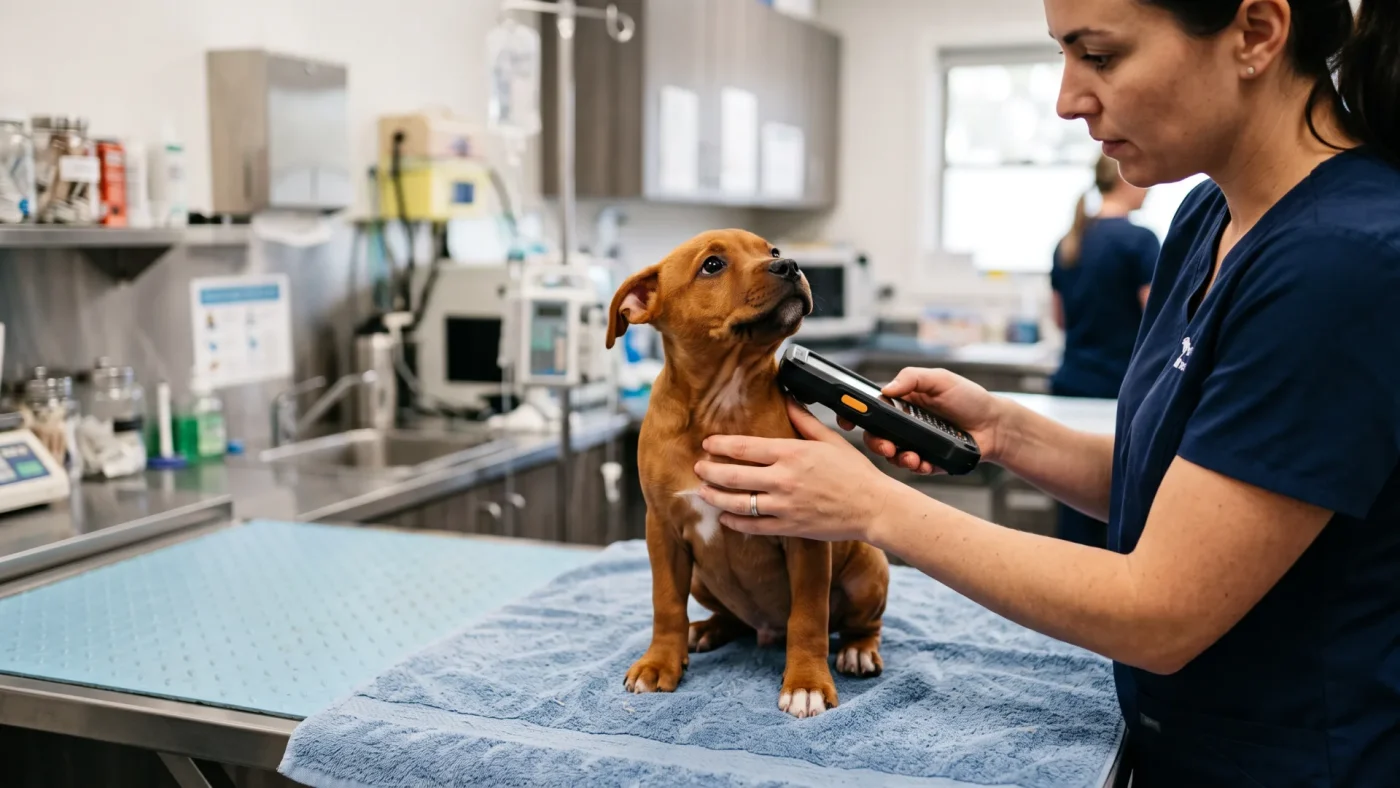
Good answer: The chip number is the same on the passport and in the contract. The registration is in the seller’s name, and the Pet Ownership Change Certificate (Ev Hayvanı Sahip Değişikliği Belgesi) needed for the transfer is handed over with the puppy.
Warning sign: A chip number that does not match the documents, a registration in “a friend’s” name, or the transfer being put off again and again.
Contract, Payment and After-Sale Support
11. Do You Provide a Written Contract, and What Does the Health Guarantee Cover?
Why ask: Verbal promises cannot be proven when a problem arises. A contract makes both your obligations and the seller’s clear.
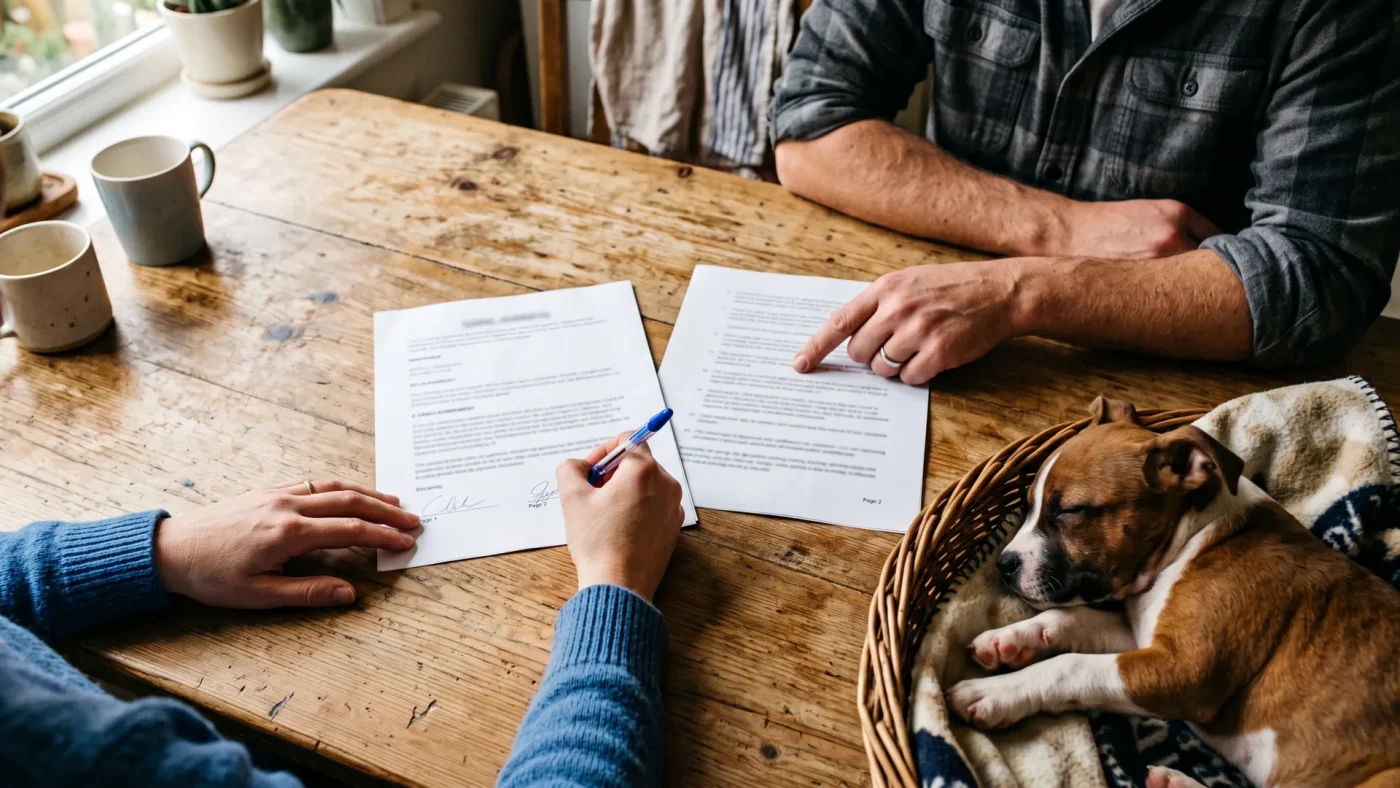
Good answer: The contract includes both parties’ details, the puppy’s chip number and date of birth, its parents, and the length and scope of the health guarantee. There is a separate clause for hereditary diseases.
Warning sign: The answer “we don’t do contracts, it’s all about trust”, or a piece of paper that only says “healthy at handover” and sets out no responsibility at all.
12. What Are Your Return Terms If Something Goes Wrong?
Why ask: An illness may show up in the first days, or your circumstances may change. You need to know in advance what will happen. If illness appears after handover, you can find out what you can do in our guide on what to do if you have bought a sick puppy.
Good answer: Time is allowed for an independent veterinary examination, and what happens if a serious problem is found is set out in writing. The seller also undertakes to take the dog back if you become unable to care for it.
Warning sign: The answer “once it’s handed over, it’s not our responsibility”, or a return that is only possible as an “exchange” for another puppy.
13. Can I Contact You With Questions After Handover?
Why ask: The first weeks are full of questions about toilet training, feeding, skin and digestion. Support from the person who has known the puppy since the day it was born is valuable during this period.
Good answer: Contact details are written in the contract. The seller wants to know how the puppy is developing and keeps answering your questions in the months that follow.
Warning sign: A seller who replies to every message instantly until payment and cannot be reached afterwards. Question 15 is the way to find this out in advance.
14. How Do the Deposit and Payment Work, and Will You Give Me a Receipt?
Why ask: A common pattern in online puppy scams is a deposit first, followed by requests for extra payments for “shipping” or “vaccinations”. A documented payment also protects you in any later dispute.
Good answer: A deposit is only requested after you have seen the premises and the mother, and you receive a signed receipt in return. The account holder is the same person as the seller named in the contract, and the conditions under which the deposit will be refunded are set out in writing.
Warning sign: A deposit before you have seen anything, one request for extra payment after another, a request to pay into someone else’s account, or the answer “we can’t give you any paperwork”.
15. Can I Talk to Owners Who Have Bought Puppies From You Before?
Why ask: The videos a seller shares show the best moments. An owner who bought a puppy a year or two ago, on the other hand, can tell you about the dog’s health and temperament and how the seller behaved afterwards. Reading owners’ experiences independently also shows you what to watch out for.
Good answer: Contact details for a few owners, shared with their permission, and a seller who has no objection to you talking to them.
Warning sign: Not putting you in touch with a single owner, or sending only screenshots of hand-picked reviews.
Save This to Your Phone: Quick Summary
You can use this short list when you visit a seller or message them:
- Where are the mother and father, and can I see them?
- Are there DNA tests, and eye and elbow reports?
- How old is the mother, and which litter is this?
- Which organisation issues the pedigree?
- How many weeks old is the puppy, and when is handover?
- Where was it raised?
- What has it been introduced to?
- What does it eat, and how will the switch work?
- Vaccination and parasite record, and the vet’s name?
- Chip number, and whose name is the PETVET registration in?
- Written contract and health guarantee?
- Return terms?
- Can I reach you after handover?
- Are the deposit and payment documented?
- Can I talk to previous owners?
When you weigh up the answers, also check the red flags in our article on how to choose a responsible English Staffy breeder to see the seller’s overall picture.
Frequently Asked Questions
What Should You Look Out for When Buying a Puppy?
The three most important things are seeing the mother in her own environment, examining the parents’ health test results with their documents, and putting the sale in a written contract. If one of these three is missing, do not rush, however good the other answers are.
How Do I Know the Seller’s Answers Are True?
See the original of every answer that relies on a document in person. Have your own vet scan the puppy’s microchip, check that the chip numbers on the test results match the parents, and contact the vet named in the vaccination record if needed.
Do These Questions Only Apply to English Staffies?
No. The health tests needed vary from breed to breed; the questions about the mother and father, the rearing environment, documents, the contract and payment apply to every breed.
Is One Bad Answer Enough to Walk Away?
Not always; for example, it is normal for the father to live in another city. But not showing you the mother, having no test results, refusing a written contract and asking for a deposit before you have seen anything are each a strong enough warning on their own.
Choosing a puppy is an emotional decision, and sellers know it. Writing your questions down in advance is a way of putting on paper what you need to keep in mind in the middle of that emotion. If the answers do not sit right with you, waiting always costs less than taking home the wrong puppy.

Most Read Articles
Bought a Sick Puppy in Turkey? Your Rights and What to Do, Step by Step
If the puppy you have just bought fell ill shortly after coming home, your first...
Oct
Hypothyroidism in Dogs: Causes, Symptoms, and Treatment Methods
In this blog post, we’ll talk about hypothyroidism, a prevalent health concern in dogs. We...
May
Is the English Staffordshire Bull Terrier a Banned Breed in Turkey? Current Law
Is the English Staffordshire banned in Turkey? The short answer is no. As of October...
Sep